
Our Cookie Philosophy: Transparency First.
We believe in building trust through clarity. This page details exactly how we use cookies on fluxeno.pro, why we need them, and how you maintain control. It’s a simple contract: we use essential tools to improve your experience, and you decide where we draw the line.

Essential Only
We only use strictly necessary cookies to keep the site secure and functional, like session management for your account and load-balancing.
Optional Analytics
Performance cookies are disabled by default. They help us identify latency bottlenecks, but you can opt-in if you'd like to contribute to benchmark data.
Your Control
Global cookie controls are available in your browser. We respect 'Do Not Track' signals and never sell data to third parties.
Cookie Breakdown: Function & Lifespan
Not all cookies are created equal. We categorize them strictly by function and lifespan. Here’s the technical anatomy of our cookie usage, mapped to real-world scenarios for Fluxeno Pro users.
Session & Security
- • Purpose: Keeps you logged in during a single browser session. Enables load balancing across our servers.
- • Lifespan: Temporary. Expires when you close your browser or clear cache.
- • Real-World Example: Prevents you from being logged out mid-analysis of a latency spike in your game.
Performance & Analytics
- • Purpose: Anonymized data on page load times, API call durations, and UI interaction patterns. Used to optimize our SDK and documentation.
- • Lifespan: 30 days to 1 year, depending on the metric.
- • Real-World Example: Identifies that developers from the Hamburg esports scene visit our latency benchmark page more often, prompting us to create targeted content.
Why We Don't Use Third-Party Trackers
Many gaming sites and developer tools rely on third-party scripts for analytics, ads, and social sharing. These scripts are opaque, often slow, and introduce privacy risks. For Fluxeno Pro, this was a non-negotiable trade-off.
Our architecture is built on a custom-built analytics pipeline hosted on our own infrastructure. We collect aggregated, anonymized metrics—like average SDK integration time or regional latency distributions—without ever identifying individual users. This approach is heavier on our engineering team but lighter on your browser and your data.
This aligns with our core mission: providing a lean, high-performance toolkit for developers. We apply the same philosophy to our own website.
Design Decision Note
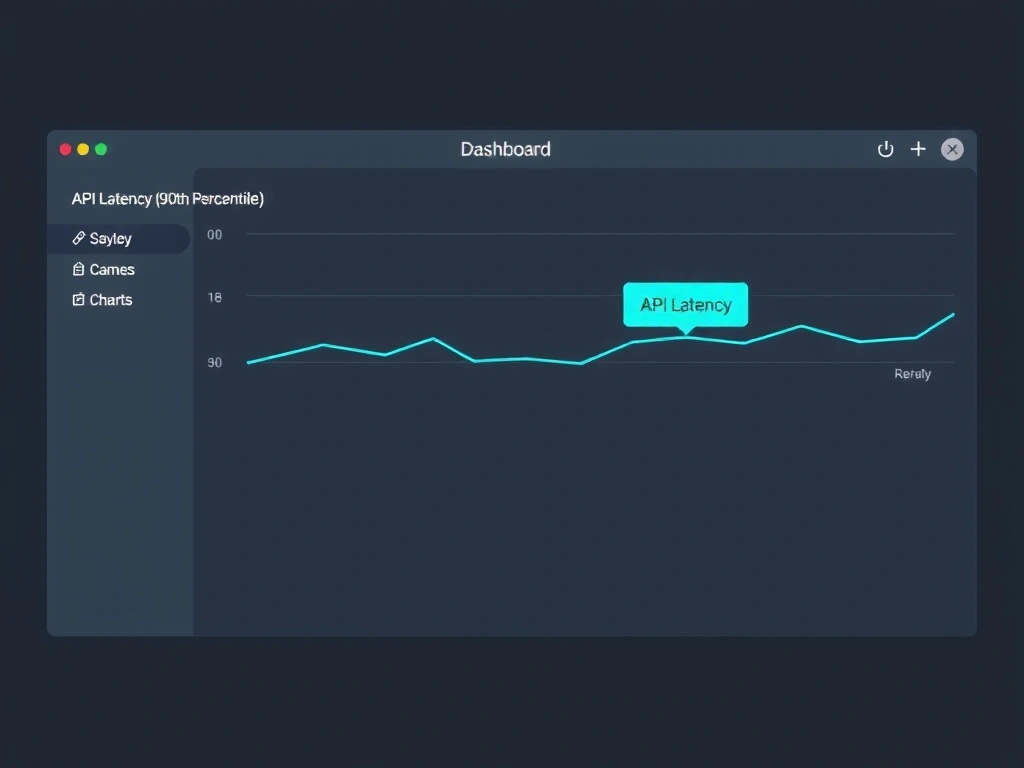
We prioritize raw performance data over user profiling. The graph above is from our internal dashboard; the same data informs our public benchmarks.
Questions We Get From Investors
A pragmatic FAQ. If you're evaluating our data ethics or technical architecture, these questions are where the conversation starts.
We hash IP addresses and use aggregated buckets for all metrics. We cannot trace an action (e.g., downloading our SDK) to a specific user or company. Our privacy policy details our one-way hashing process.
Higher infrastructure costs (~15% of our server budget) and dedicated engineering time. The trade-off is user trust and avoiding third-party script bloat, which directly impacts the performance metrics we showcase.
Yes. Our system detects the DNT header and disables all non-essential tracking cookies automatically. We believe in honoring user intent, even if it reduces our analytical view.
We are already developing a first-party identifier system to replace session cookies if needed. Our current architecture is designed for minimal reliance on browser storage, making us adaptable.
Most gaming sites use Google Analytics, Facebook pixels, and ad networks. We use none. Our data stays on our servers, serving only our optimization and performance benchmarking efforts.
Questions About Data Handling?
For specific compliance questions (GDPR, CCPA) or technical details on our analytics pipeline, our team is available. We process data-related inquiries directly, without outsourced support.